7 Best Box Erector Machines for Global Buyers

Choosing a Box Erector is not just a matter of chasing the fastest cycle rate. The right machine must handle your carton sizes, board quality, production volume, and available floor space. A unit that performs well on one packaging line may struggle with another. Details matter.

This guide reviews seven box erector machines for global buyers, with practical factors to consider before requesting a quote. We look at forming speed, carton range, changeover needs, footprint, operator access, and support availability. A clear specification sheet helps, but it cannot answer every question. Ask suppliers how the machine performs with your actual cartons, and request sample runs when possible. Even small differences in board stiffness or carton dimensions can affect feeding and squareness.

Think beyond the purchase price. Check what routine maintenance involves, how spare parts are sourced, and whether manuals and training are available in a language your team can use. Confirm that the machine can integrate with your existing conveyor or case-packing line. These checks are especially useful when equipment will be installed far from the supplier.

There is no universal winner. A compact model may suit a smaller operation, while a high-volume line may need faster, more automated forming. And specifications can be imperfect guides. Use this shortlist to compare options, then verify each machine against your production requirements before making a decision.
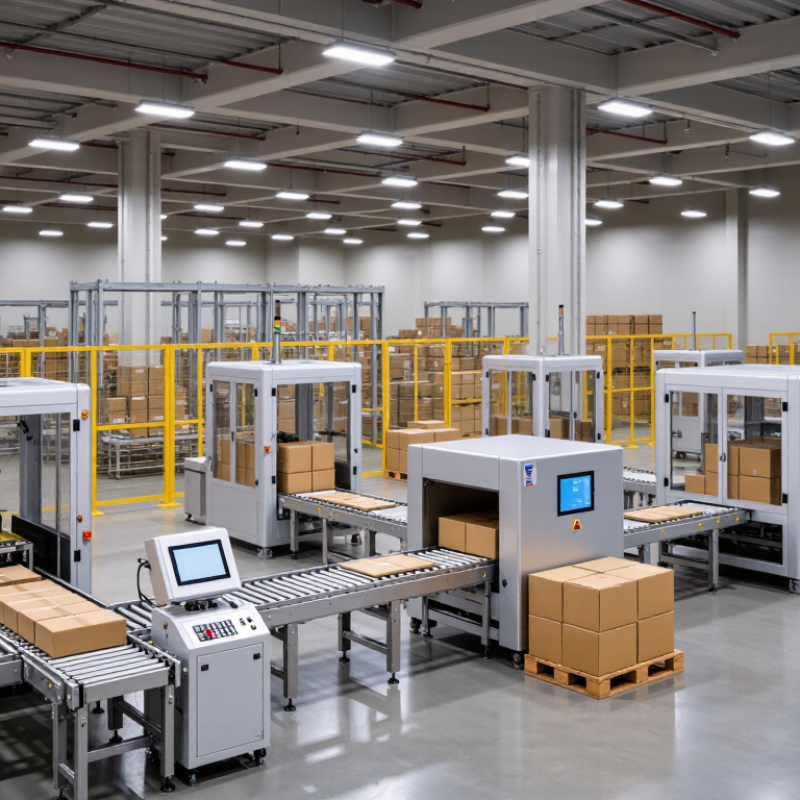
7 Best Box Erector Machines for Global Buyers

Box Erector Basics: From Flat Corrugated Blanks to Formed Cases

A box erector converts flat corrugated blanks into stable shipping cases. The machine separates each blank with vacuum cups, opens the panels, squares the shape, and folds the bottom flaps. Taping or hot-melt sealing then creates a usable case.

The process looks simple, but small errors matter. A weak vacuum grip can pull two blanks together. Poor squaring may produce tilted cases and uneven pallet loads. Smithers reported the global corrugated packaging market at approximately US$205.8 billion in 2024, with further growth expected through 2029. That scale increases pressure for reliable, high-speed forming equipment. PMMI’s packaging automation research also identifies labor availability and changeover efficiency as major investment concerns. Operators should check blank quality, flute direction, and compression strength before judging machine performance. Real plants are less perfect.

Tips: Match the erector to your blank size range, board grade, and sealing method. Test recycled board carefully. Its surface can behave differently, especially in humid rooms. Ask suppliers to demonstrate repeated changeovers, not only maximum speed. Record jam frequency, setup time, and rejected cases during the trial. A machine that runs quickly but needs constant adjustment may cost more in practice. Intended speed is not always usable speed.

Machine Types and Selection: Compare 7 Models by Speed and Carton Range

7 Best Box Erector Machines for Global Buyers

Machine Types and Selection: Compare 7 Models by Speed and Carton Range

Box erector performance depends on more than advertised speed. A semi-automatic model typically handles 6–10 cartons per minute, with carton sizes from 150 to 500 millimeters. It suits smaller warehouses and changing orders. A compact intermittent machine reaches 8–12 cartons per minute and usually accepts 180–450 millimeter cartons. Both need regular operator attention.

A standard automatic erector can produce 15–20 cartons per minute across a 200–600 millimeter range. High-speed continuous models may reach 25–35 cartons per minute, but they often require stable carton quality and accurate loading.

Wide-carton machines run closer to 10–18 cartons per minute, handling sizes from 400 to 1,000 millimeters. The larger range can reduce speed. That trade-off is easy to miss.

Flexible robotic systems often manage 12–25 cartons per minute, covering approximately 150–900 millimeters. Heavy-duty erectors operate at 8–15 cartons per minute and support cartons up to 1,200 millimeters. I once favored speed over carton variation, and the machine struggled with smaller boxes. That lesson still matters.

Check actual samples, tape or adhesive performance, changeover time, and compressed-air needs before purchasing. Ask for tested output, not only catalog figures. A reliable supplier should explain limits clearly and provide performance records for your carton materials.

Global Electrical Requirements: 50/60 Hz Supply and IEC 60204-1 Safety

For global buyers, a box erector must match local electrical conditions before installation. The International Energy Agency’s Electricity 2024 report projects global electricity demand will grow by about 4% in 2024 and 2025. That growth increases pressure on factories, especially where voltage quality fluctuates.

Frequency matters. A 50 Hz motor should not be treated as automatically equivalent to a 60 Hz motor. Speed, thermal loading, transformer sizing, and control timing can change. Confirm the machine’s rated voltage, phase, frequency, short-circuit rating, and grounding method. A practical test uses a calibrated meter at the incoming terminals, both idle and under load. Small details matter.

IEC 60204-1:2016+A1:2021 provides a widely recognized framework for machinery electrical equipment. It addresses protective bonding, disconnecting devices, emergency stop functions, control circuits, and verification. Buyers should request test records, wiring diagrams, insulation checks, and continuity results. The enclosure should also suit the factory environment, including dust, moisture, and cleaning routines.

Do not rely on a universal plug.

A 50/60 Hz label may hide important differences. Some control power supplies accept both frequencies, while motors or transformers may require adjustment. Local engineers should review fault protection and isolation requirements before shipment. In my experience, documentation is often the weak point, not the machine itself. That deserves a second check.

Packaging Validation: ISTA 3A Applies to Packaged Products up to 70 kg (150 lb)

7 Best Box Erector Machines for Global Buyers

For packaged products weighing up to 70 kg (150 lb), ISTA 3A offers a practical validation framework. It targets individual parcels moving through common parcel delivery systems. The test examines how packaging responds to conditioning, vibration, compression, drops, and other handling shocks. It does not certify a box erector machine. It evaluates the complete packaged product.

This distinction matters when selecting equipment. A reliable box erector should form consistent box geometry, square corners, and stable bottom flaps. Small variations can change compression strength. Operators should record carton dimensions, board grade, product weight, closure method, and loading orientation. Then, test samples should represent normal production, not carefully prepared exceptions. Real packaging is rarely perfect.

A useful trial starts with several machine-formed cartons. Inspect crushed corners, open seams, panel distortion, and product movement after testing. One weak carton can reveal a repeatability problem. Our first assumption may be wrong. Faster erection does not always mean better protection. Humidity, recycled board, and uneven loading can affect results significantly. Keep test records, photographs, and sample identification for traceability. If a package fails, adjust the carton design, loading method, or machine settings before repeating validation. A qualified testing laboratory can help interpret results and confirm whether the selected ISTA 3A procedure fits the shipment profile.

7 Best Box Erector Machines for Global Buyers

Packaging Validation: ISTA 3A Applies to Packaged Products up to 70 kg (150 lb)

ISTA 3A is a general simulation test for packaged-products weighing up to 70 kg (150 lb). Box erector selection should therefore consider the finished package weight, carton dimensions, closure quality, and the intended distribution environment before validation testing.

FAQS

What does a box erector do?

It separates flat corrugated blanks, opens panels, squares cases, folds bottom flaps, and seals them. Small errors matter.

How can poor blank handling cause problems?

Weak vacuum grip may pull two blanks together. Poor squaring can create tilted cases and uneven pallet loads. Real plants are less perfect.

Which box erector suits a smaller warehouse?

Semi-automatic models usually form 6–10 cartons per minute. They commonly handle cartons from 150 to 500 millimeters. Operators need regular attention.

What output can automatic machines provide?

Standard automatic models often produce 15–20 cartons per minute. Typical carton sizes range from 200 to 600 millimeters. Actual output depends on board quality and setup.

Are high-speed machines always the best choice?

No. Continuous models may reach 25–35 cartons per minute. They need stable blanks, accurate loading, and reliable sealing. Usable speed may be lower.

What should buyers test before purchasing?

Test actual carton samples, sealing performance, changeover time, and compressed-air demand. Record jams, setup minutes, and rejected cases. Catalog speed is not enough.

How can recycled board affect machine performance?

Recycled board may behave differently, especially in humid rooms. Its surface can affect vacuum pickup and sealing. Test it carefully.

What electrical details must global buyers confirm?

Confirm voltage, phase, frequency, grounding, and short-circuit rating before installation. Check incoming power with a calibrated meter, idle and under load. Do not assume compatibility.

Why does 50 Hz or 60 Hz matter?

Frequency can change motor speed, heat, transformer sizing, and control timing. Some power supplies accept both frequencies. Motors may not.

What safety documents should buyers request?

Request wiring diagrams, protective-bonding records, insulation checks, continuity results, and emergency-stop verification. Review isolation and fault protection locally. Documentation needs a second check.