 English
 Español de México

2026 Top Packaging Equipment Manufacturers Worldwide?
The 2026 packaging industry is becoming more automated, connected, and demanding. Manufacturers now compete on speed, precision, energy use, and service quality. Packaging Equipment must also support changing product formats and stricter sustainability expectations.
This guide examines leading Packaging Equipment manufacturers worldwide. It considers filling machines, cartoners, labeling systems, case packers, palletizers, and complete production lines. The evaluation focuses on practical performance, engineering capability, installation support, and long-term reliability. A fast machine is not always the best investment. Stable output matters more when operators manage thousands of units daily.
Real production details can reveal important differences. A reliable line should maintain accurate dosing during long shifts. Sensors should detect misaligned cartons before they create expensive stoppages. Operators also need clear interfaces, accessible components, and replacement parts that arrive on time. These details often matter more than impressive demonstrations.
No ranking is flawless. Regional service quality can change the ownership experience. Published specifications may also differ from actual factory conditions. Therefore, buyers should verify performance through site visits, reference customers, trial runs, and documented maintenance records. Independent testing remains valuable.
This overview combines manufacturer information, industry experience, and practical purchasing considerations. It aims to help food, beverage, pharmaceutical, personal care, and industrial companies compare suppliers more carefully. The strongest manufacturers are not simply those with the largest catalogs. They are companies that understand production realities, communicate clearly, and improve equipment after problems appear. That standard deserves attention in 2026.
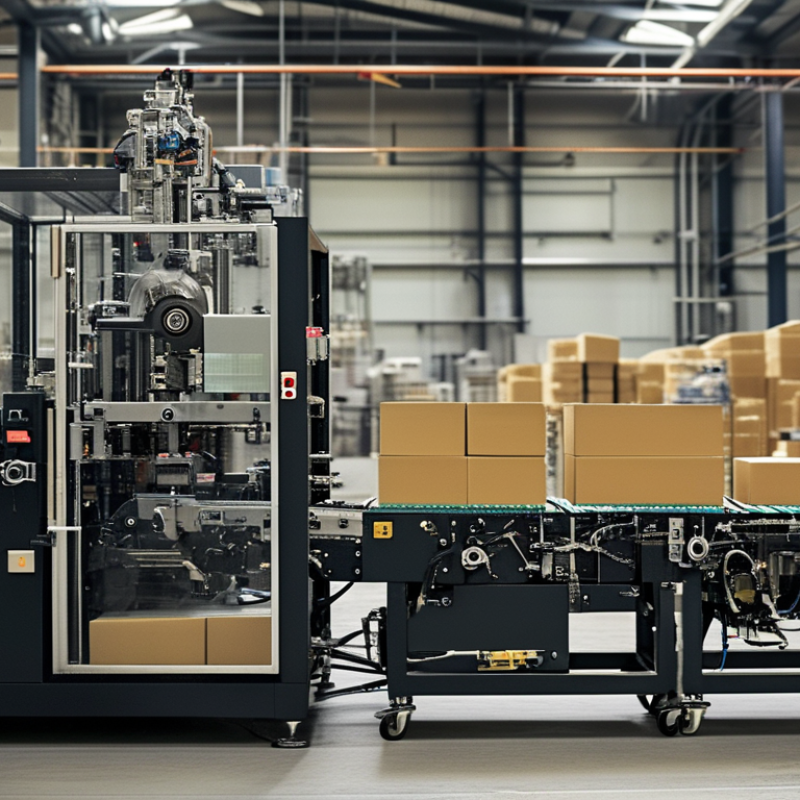
Global Packaging Equipment Market Overview in 2026
2026 Top Packaging Equipment Manufacturers Worldwide?
Global Packaging Equipment Market Overview in 2026
The global packaging equipment market is entering 2026 with steady, uneven growth. Fortune Business Insights valued the market at approximately USD 43.9 billion in 2023. Its forecast reaches about USD 61 billion by 2032, with regional differences remaining significant. PMMI’s industry research also identifies automation, flexible packaging, and labor shortages as major investment drivers. Buyers increasingly request equipment that handles several formats without lengthy changeovers.
The strongest manufacturers usually combine mechanical reliability with responsive engineering support. Hygienic stainless-steel frames, servo-driven filling systems, and vision inspection are becoming practical expectations. Energy monitoring now matters beside production speed. A machine may run quickly, yet waste materials during setup. That weakness is easy to miss.
Industry forecasts do not fully agree. MarketsandMarkets reports a different market size and growth path from Fortune Business Insights. Forecasts are not crystal balls. Inflation, factory investment, and regional regulations can change purchasing plans quickly. The most credible suppliers therefore publish measurable uptime data, validation records, and service response targets. They also test equipment with real products, including fragile containers and inconsistent film rolls. In 2026, purchasing teams may value transparent lifecycle costs more than impressive headline speed. This shift remains incomplete.
2026 Top Packaging Equipment Manufacturers Worldwide? – Global Packaging Equipment Market Overview in 2026
| Market Dimension | 2026 Indicator | Global Position | Key Market Insight |
|---|---|---|---|
| Total Packaging Equipment Market | Approximately US$58 billion | Worldwide | Demand is supported by e-commerce, food safety requirements, automation investment and the expansion of packaged consumer goods. |
| Market Growth Rate | Estimated CAGR of 5%–6% through 2030 | Moderate and sustained growth | Growth is stronger in automated, flexible and digitally connected equipment than in basic standalone machinery. |
| Asia-Pacific | Approximately 38%–42% of global demand | Largest regional market | Manufacturing expansion, urbanization and rising packaged-food consumption continue to drive equipment purchases. |
| Europe | Approximately 25%–28% of global demand | Mature, technology-intensive market | Investment is concentrated in energy efficiency, recyclable materials, traceability and high-speed automation. |
| North America | Approximately 20%–23% of global demand | High-value automation market | Labor shortages, reshoring and demand for flexible production lines are accelerating upgrades and retrofits. |
| Latin America, Middle East and Africa | Combined share of approximately 12%–16% | Emerging growth markets | Demand is linked to local food processing, beverage production, pharmaceutical capacity and retail modernization. |
| Filling and Dosing Equipment | One of the largest equipment categories | Strong demand in food, beverage, cosmetics and pharmaceuticals | Precision dosing, hygienic design and quick product changeovers are major purchasing criteria. |
| Form-Fill-Seal Systems | High-growth flexible packaging segment | Widely used for pouches, sachets and bags | Compact footprints, lower material consumption and multi-format capability support adoption. |
| Cartoning, Case Packing and Palletizing | High automation potential | Strong across secondary and tertiary packaging | Robotic handling and integrated end-of-line systems are reducing manual labor and improving consistency. |
| Labeling, Coding and Inspection | Above-average technology adoption | Essential for regulated and traceable products | Serialization, vision inspection, product authentication and digital traceability are key investment areas. |
| Food and Beverage Applications | Largest end-use sector | Global volume leader | High production volumes and strict hygiene requirements create continuous demand for automated equipment. |
| Pharmaceutical and Healthcare Applications | One of the fastest-growing end-use sectors | High-value, compliance-driven demand | Track-and-trace rules, sterile processing and product security support investment in advanced systems. |
| Digitalization and Industry 4.0 | Core purchasing differentiator in 2026 | Increasingly standard in new installations | Remote monitoring, predictive maintenance, machine connectivity and production analytics are becoming mainstream. |
| Sustainability Requirements | Affecting most new equipment specifications | Global priority | Lower energy use, reduced material waste, recyclable packaging compatibility and efficient changeovers influence capital decisions. |
| Competitive Manufacturer Profile | Preferred characteristics in 2026 | Global and regional suppliers compete across multiple tiers | The strongest manufacturers typically combine application expertise, dependable service, spare-parts availability, modular design and lifecycle support. |
Note: Market values and regional shares are rounded industry estimates for 2026. Percentages may not total 100% because of rounding and differences in market definitions across research sources.
Related Posts
-
How to Choose the Right Packaging Equipment?
-

Why Packaging Equipment is Essential for Efficient Production Processes
-

How to Choose the Best Packaging Machinery for Your Business Needs
-

Maximizing Efficiency in Automated Packaging Systems with Cost Effective Maintenance Solutions
-
7 Benefits of Choosing Packaging Robots for Your Business Efficiency
-

Exploring Innovative Alternatives to Automatic Box Tapers for Efficient Packaging Solutions